

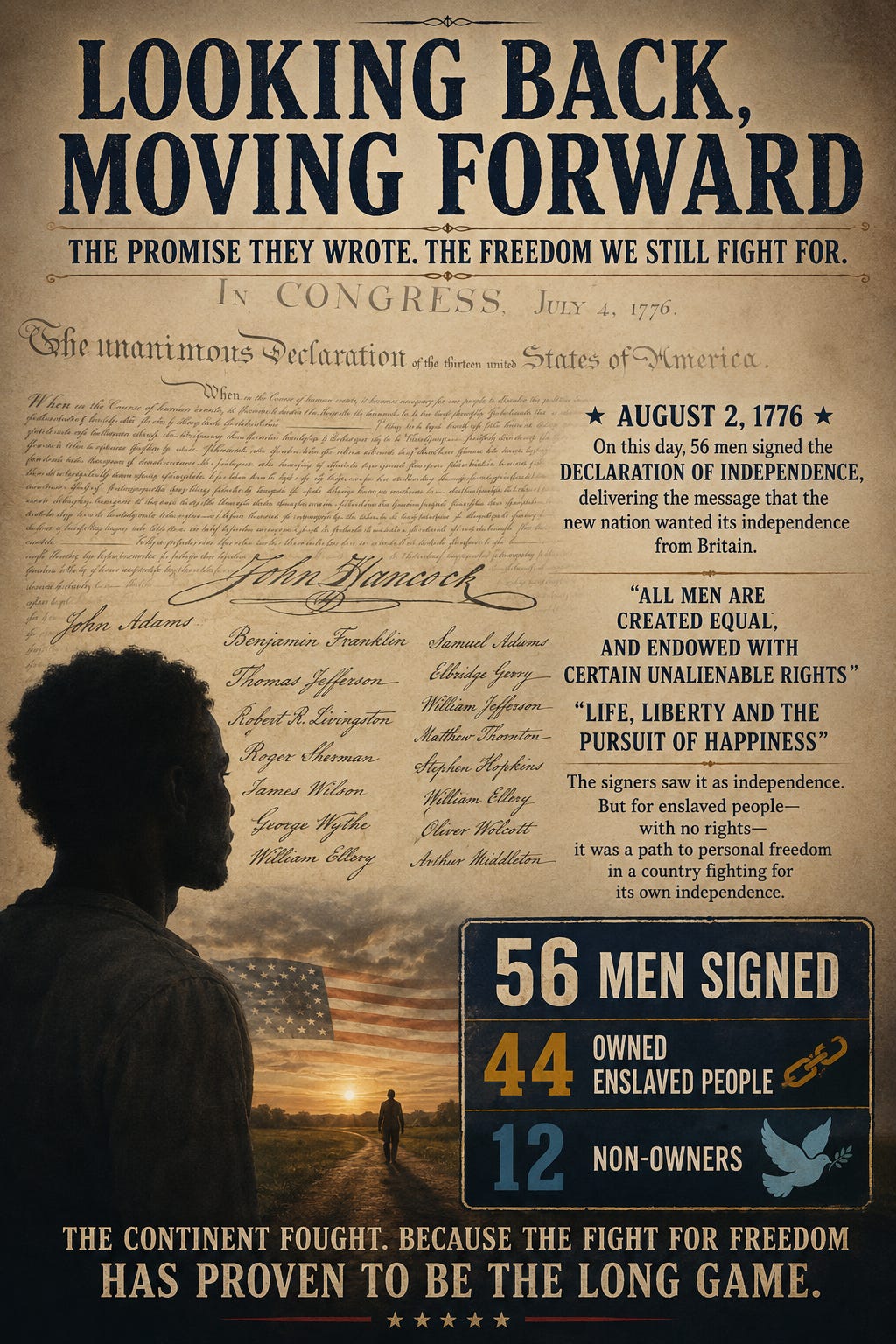
On August 2, 1776, the United States declared its independence from Britain by signing the Declaration of Independence. Thomas Jefferson wrote most of it, and Benjamin Franklin helped revise it. Fifty-six men signed it, and only 12 did not own slaves. Forty-four of the signers owned enslaved people, including George Washington, Thomas Jefferson and Benjamin Franklin. Franklin became an abolitionist late in life and arranged for the remaining enslaved people in his household to be freed after his death in 1790. But on that August day, the message the 56 signers delivered to Britain was that the new nation wanted to break away and claim its freedom.
The Declaration of Independence did not end slavery. Even though it says “all men are created equal and endowed with certain unalienable Rights” and mentions “Life, Liberty and the pursuit of Happiness,” the authors did not live by these words. Still, the document was aspirational. Enslaved people saw its promise and viewed the Declaration as offering “a way out of no way.” For those with few rights, it became a strong symbol of hope and a possible path to freedom in a country fighting for its own independence.
The Declaration of Independence also gave future generations a tool, a compass, and a claim to demand change. In that sense, it became more than just a break from Britain. It became the only language powerful enough to hold a democracy accountable to its own promise. Even today, it continues to inspire the ongoing fight for justice and freedom for all.